

In This Alternate Reality
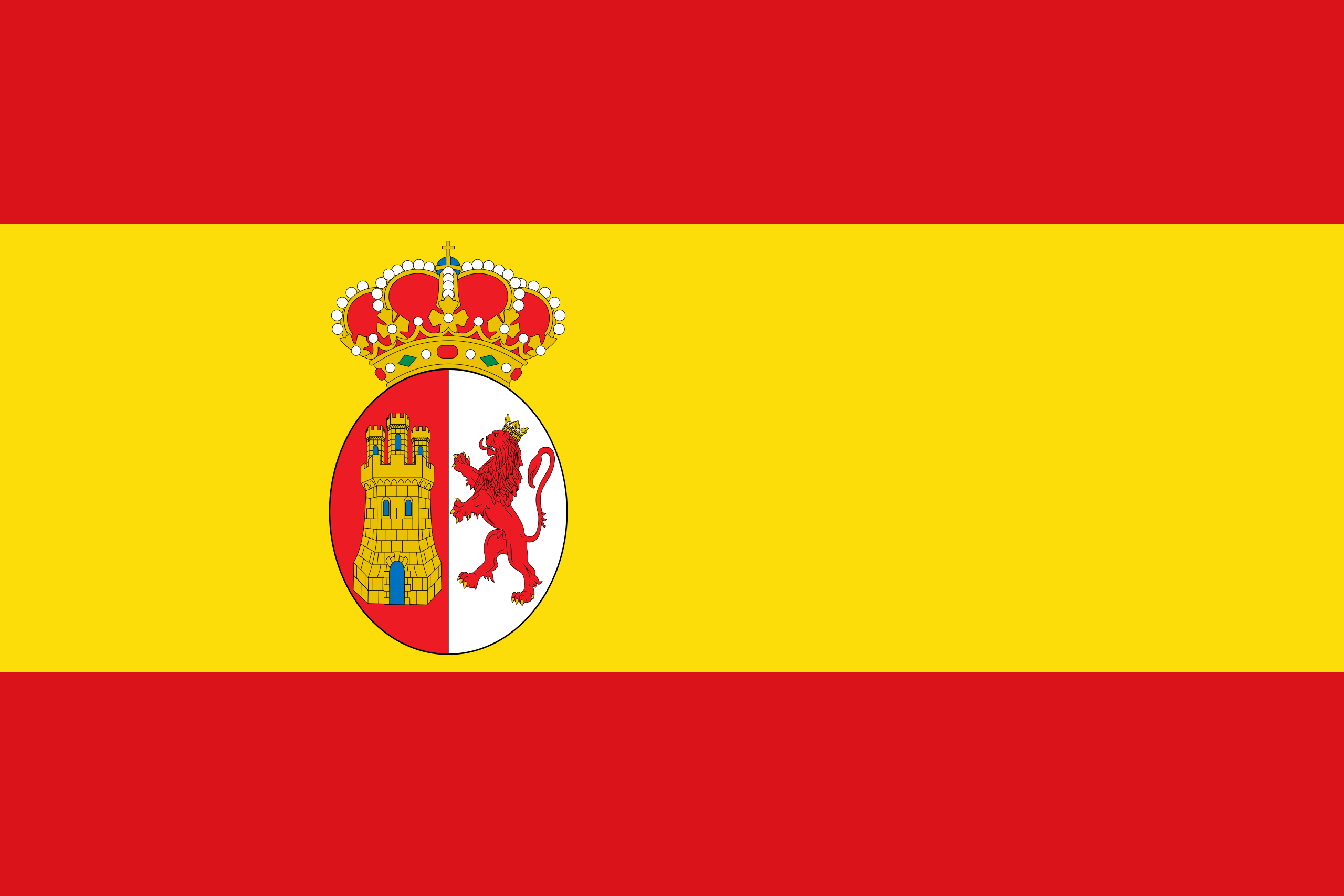
Spanish Decline
Thomas Jefferson, influenced by an early vision of Manifest Destiny, saw the Spanish Empire as a dying giant. His famous prophecy about the spreading revolutionary flames across the Americas was twofold—ideological and territorial. Jefferson believed it was inevitable the U.S. would absorb Spanish holdings, waiting patiently until American populations were strong enough to claim territories piece by piece. His 1803 acquisition of Louisiana, a former Spanish colony, marked the beginning of this vision.
Mexico Taken
Though no longer part of the Spanish Empire, Mexico’s former colonial status and geographic centrality made it a key milestone in Jeffersonian visions of continental expansion. The 1848 Treaty of Guadalupe Hidalgo transferred Mexico’s northern territories to the United States, but resistance in the south quickly reignited conflict. U.S. forces occupied Veracruz and advanced inland, confronting entrenched militias and a collapsing Mexican state. The war’s second phase proved bloodier and more chaotic than the first, as federal troops became bogged down in a grinding campaign to secure the interior.
At the same time, instability to the south drew the U.S. deeper into Central America. In 1849, facing the threat of Guatemalan aggression, El Salvador, Honduras, Nicaragua, and Mosquitia petitioned for U.S. annexation and were accepted. Guatemala launched a preemptive invasion, prompting an American military response and its own annexation by 1851. What began as a border war had by then transformed into a continental campaign. Though formal annexation was complete, the aftermath would be defined by years of guerrilla resistance, military occupation, and political upheaval that bled into the coming War Between the States.
Annexation of Santo Domingo
By 1871, the United States had firmly entrenched itself in Mexico and Central America, and strategic attention turned toward the Caribbean. President Ulysses S. Grant, publicly citing economic opportunity and safe refuge for freedmen, pushed for the annexation of Santo Domingo (modern-day Dominican Republic). But beneath the rhetoric lay a more pragmatic motive: locking down a critical foothold in the Caribbean before European powers could reassert influence in the region.
The proposal found crucial backing from newly admitted Mexican and Central American states, which lobbied Congress in support of the treaty. Their representatives emphasized regional stability, shared defense, and economic integration, tipping the scales in Grant’s favor. With the support of Dominican president Buenaventura Báez and no nationally organized opposition on the island, the annexation passed through Congress by a narrow margin.
Some in Washington also eyed neighboring Haiti as a long-term strategic concern, though no formal annexation efforts were pursued at the time.
By year’s end, Santo Domingo entered the Union, marking the United States’ first overseas annexation, and a turning point from continental conquest to maritime empire.
The Spanish-American Showdown
The Spanish-American War of 1898 represented a decisive moment for U.S. imperial ambitions. Already controlling Mexico and Central America, the U.S. swiftly defeated Spanish forces, annexing strategic island territories: Cuba, Puerto Rico, Guam, and the Philippines. Creating a burgeoning maritime empire in the Western Hemisphere.
The Costa Rican Plebicite
By the early 20th century, the United States had firm control over the isthmus from southern Mexico through Nicaragua. That left Costa Rica as one of the last independent holdouts in a region increasingly absorbed into the Union. Officially neutral and deeply proud of its democratic tradition, Costa Rica resisted annexation efforts. But in 1914, with U.S. officials exploring a secondary canal route through Nicaragua, pressure mounted. Washington made clear that if Costa Rica did not cooperate with American security and commercial interests, it risked isolation or worse.
Faced with U.S. military presence to the north and growing American influence in Panama, Costa Rica reluctantly agreed to a limited security arrangement in 1916. Over the next several years, American infrastructure, banking, and administrative personnel flooded into the country. A plebiscite on formal annexation was held in 1921 and narrowly passed, amid bitter public debate, political intimidation, and allegations of backroom deals. Costa Rica was formally admitted as a U.S. state the following year. Though the transition was bloodless, it left a lasting political and cultural rift within Costa Rica that would persist for generations.
Jewel of the East
In 1934, as the United States consolidated its hold over the Pacific, Congress passed the Philippine Territorial Transition Act, granting the islands provisional territorial status and laying out a formal path to statehood by 1944. Unlike the independent commonwealth model floated in earlier decades, this act marked the Philippines as a permanent part of the Union in waiting. Framed as a ‘civilizing‘ and strategic endeavor, the move was justified by the growing influence of Japan, the rise of regional communism, and an entrenched belief that American prosperity and security required Pacific dominion.
Unfortunately, the War in the Pacific shattered those plans. The Japanese occupation left the Philippines devastated, and by the war’s end, expectations of independence had taken hold among many Filipinos. But Washington – pointing to the original 1934 act, made it clear: the Philippines would not be let go. Instead, it would be rebuilt and admitted to the Union. Naturally, this announcement touched off a wave of unrest, with former guerrillas turning their guns on U.S. forces, communist and nationalist factions waging low-level insurgency, and political leaders bitterly divided over whether to resist or cooperate.
Over the following decade, the United States poured billions into infrastructure, education, and military installations, while quietly dismantling opposition and co-opting elites. In the southern provinces, particularly Mindanao and Bangsamoro, resistance hardened into a long communist insurgency. U.S. forces fought a grinding jungle war throughout the 1950s and into the early 1970s, facing ambushes, political assassinations, and an entrenched rebellion with deep local support. The campaign became a crucible of American counterinsurgency strategy, echoing the later war in Vietnam.
The compromise that emerged by 1959 was a federal model. Initially, four distinct states were created: Luzon, Visayas, Mindanao, and Manila. Each had its own government, all tied into the federal system. Later, Bangsamoro was admitted as part of the treaties ending the conflict in Mindanao in the early ’70s.
Statehood brought representation in Congress, full citizenship, and economic access, but it left scars. Together, the Philippine states formed the cornerstone of U.S. dominance in the Pacific, a massive foothold marketed as the shining example of freedom in Asia, even as memories of the conquest remained raw in many corners of the archipelago.
Panamania 64!
By the mid-20th century, the Panama Canal had become one of the United States’ most vital commercial and military assets — but also one of its most politically volatile. Though the U.S. had operated the Canal Zone for decades, Panamanian resentment over sovereignty and national dignity reached a boiling point in 1964. Violent protests, sparked by a flag dispute, left dozens dead and hundreds wounded. As international condemnation mounted, the U.S. faced a stark choice: risk further instability in the hemisphere or find a permanent solution.
Backed by hawkish members of Congress, a bold proposal emerged: full annexation and statehood for Panama. Proponents argued it would secure the canal permanently, eliminate legal ambiguities, and deliver long-overdue infrastructure and economic investment. It would also narrow the US southern border to the narrowest possible chokepoint at the Darien Gap.
Critics pointed to entrenched elites, nationalist backlash, and Communist agitation, but a popular movement among Panama’s working class began to see U.S. statehood as a path out of poverty and corruption. In late 1964, a tightly contested plebiscite was held. With support concentrated in urban zones around the canal, the measure passed. The following year, Panama was admitted as the southernmost U.S. state, cementing hemispheric control from the Arctic Circle to South America.
References
https://www.newspapers.com/newspage/620123811
https://timesmachine.nytimes.com/timesmachine/1899/04/23/120264952.html?pageNumber=7
https://www.newspapers.com/article/daily-independent-journal-panama-stateho/135141273
https://archive.org/details/unitedstatessixa0000ches/mode/2up (Page 6)
https://archive.org/details/inevitablerevolu0000lafe/mode/2up (Page 18)